Plan My Comeback is paid by partner companies when readers use offers on this site. Advertiser Disclosure
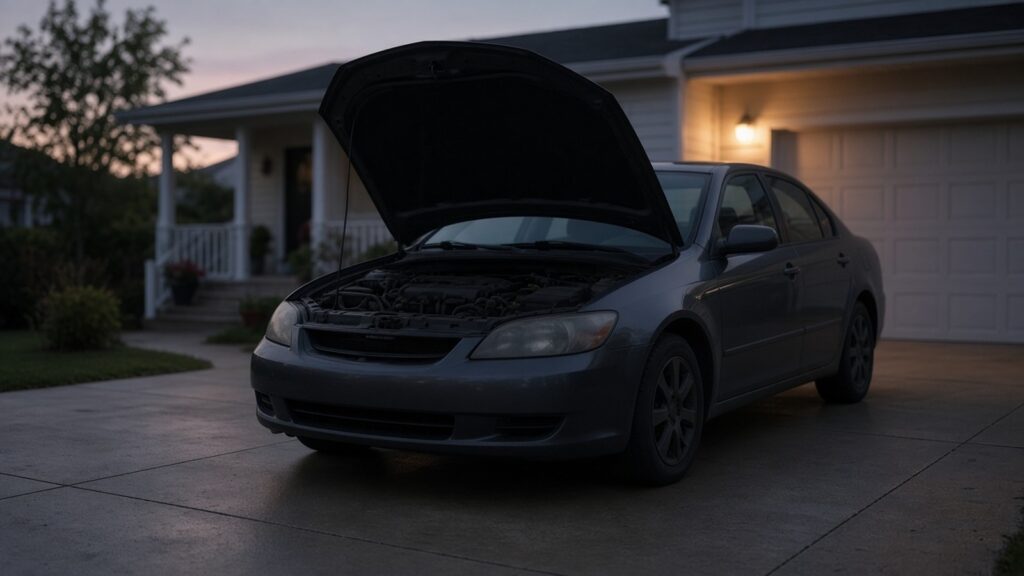
Ray’s brakes started grinding on a Tuesday. The shop quoted $400 to fix them. He had $85 in checking, and payday was nine days away. Ray is an example, not a real reader, but his question is one the Federal Reserve asks Americans every year: could you cover a $400 surprise?
One surprise bill away from a rough month?
Get the free Plan My Comeback guides for the months when one unexpected bill throws everything off: step-by-step help with living paycheck to paycheck, paying down debt and a 90-day plan to get back on track, sent to your inbox after you answer a few quick questions. It’s free, you can unsubscribe anytime, and answering the questions won’t affect your credit score.
In the Fed’s latest survey, released in May 2026 and taken in October 2025, 63% of adults said they would cover a $400 emergency expense entirely with cash, savings or a credit card paid off at the next statement. The other 37% would borrow, sell something, or couldn’t cover it at all (Federal Reserve). Car trouble is the most common shock: 30% of adults had a major vehicle repair or replacement in the prior 12 months (Federal Reserve). If you’re short right now, you can also answer a few quick questions about your money to get free guides by email and see partner offers. Here is how Ray’s nine days could go.
How people actually cover it
Among people who wouldn’t use cash, the most common answer was a credit card paid off over time. Many gave more than one answer:
| Approach | Share of adults |
|---|---|
| Put it on a credit card and pay it off over time | 15% |
| Borrow from a friend or family member | 10% |
| Sell something | 7% |
| Use a bank loan or line of credit | 3% |
| Use a payday loan, deposit advance or overdraft | 2% |
| Couldn’t pay for it right now | 12% |
Source: Federal Reserve, Economic Well-Being of U.S. Households in 2025, table 25. People could pick more than one answer, so each share is a share of all adults, and the answers add up to more than the 37%.
For Ray, the first questions are for the shop: what exactly the $400 covers, and whether it offers a payment plan. Asking costs nothing, and brakes aren’t a repair to put off. A friend or relative might lend $315 until payday, ideally with the repayment date written down so nobody is left guessing.
Putting it on a card is the most common move, and it works if Ray can pay it off quickly. Carried for months at today’s card rates, the cost grows. Another option is freeing up cash elsewhere. The NCUA suggests talking with creditors to negotiate more time to pay bills (NCUA), and the same order of priorities from which bills to pay first applies here: the car that gets Ray to work ranks near the top.
The fast money that costs the most
A payday loan is usually a short-term, high-cost loan, generally $500 or less, due in one payment on your next payday. The lender typically takes a post-dated check or permission to withdraw the money from your account on the due date. A typical two-week loan with a $15 fee per $100 borrowed works out to an APR of almost 400%. Some states let lenders “roll over” a loan, so you pay only the fees and the lender pushes back the due date (CFPB).
A lower-cost option to ask about is a credit union “payday alternative loan,” or PAL. Federal credit unions may offer two kinds. PALs I run $200 to $1,000, repaid over one to six months, and you must have been a member for at least a month. PALs II can be up to $2,000, repaid over one to 12 months, and the rule doesn’t require a waiting period after you join. For both, the application fee can’t be more than $20, and the APR can be up to 28% under the NCUA’s current rate ceiling (12 CFR 701.21). Many state-chartered credit unions offer similar loans. Be careful online, though: some lenders use the “payday alternative” name without being a credit union (NCUA).
Is the surprise bill squeezing everything else?
Answer a few quick questions about your money. They include an optional check of food, housing, utility and healthcare assistance programs through a partner resource site. You’ll also get free guides by email. Free to answer, with no obligation.
Starting the next $400
Once the brakes are fixed, the next surprise is still coming. A cushion doesn’t have to start big. In the same Fed survey, 18% of adults said the largest emergency expense they could cover from savings right now was under $100 (Federal Reserve). The CFPB says even a small emergency fund can provide some security, and suggests setting a goal based on the surprises you’ve had before (CFPB).
For someone with little room to save, the CFPB says the easiest ways to start are managing cash flow, meaning the timing of money in and out, and setting aside part of a tax refund. It also calls automatic recurring transfers often one of the easiest ways to save (CFPB). If Ray moved $10 into savings every two weeks, that would be $260 after a year. That’s not the full $400, but it would cover more than half of a bill like this one without borrowing.
Want free help before the next surprise?
The questions take a few minutes and cover your income, your debts and your goals. You’ll get free guides by email, and depending on your answers you may see offers from partner companies. Some offers can involve credit checks or fees. Free, with no obligation.
Being one of the 37% who wouldn’t cover $400 with cash or its equivalent is common, not a personal failing. A call to the shop, a careful look at the cheaper ways to borrow, and a small automatic transfer can make the next surprise easier to face.
This article is for general information only and is not financial or legal advice.